CH13: Report Writing for High-Tech Investigations
Introduction
An examiner can run a flawless acquisition, validate hashes perfectly, carve files at the block level, and reconstruct a timeline to the millisecond, and none of that technical work survives first contact with an attorney, a judge, a jury, or a hiring manager if the report is unclear, disorganized, or undefensible. The report is the only deliverable most people outside the forensics lab will ever see. It is where the investigation meets the audience.
Every decision in this chapter flows from a single tension: forensic reports must be precise enough to withstand technical peer review and accessible enough for non-technical decision makers. An SQL query in an appendix has to be exact. The sentence that explains what the query found has to be readable by a prosecutor who has never opened a SQLite database. The section ordering, the numbering scheme, where figures go, the tone of the prose, the glossary choices, all of these exist to bridge two very different audiences in one document.
Report writing also occupies a disproportionate share of a practicing examiner's time. In public-sector labs (state Bureau of Criminal Investigation units, federal agencies, municipal police computer crime squads) and in private-sector firms (incident response vendors, eDiscovery shops, internal corporate investigations), examiners routinely spend thirty to fifty percent of their working hours writing. Technical skill gets a new analyst hired. Report quality gets that analyst promoted, trusted with high-stakes cases, and invited back as an expert witness. Examiners need to develop report-writing skills alongside their technical skills.
Learning Objectives
- Explain the legal drivers behind forensic report writing, including Federal Rules of Civil Procedure Rule 26, and describe why written reports carry both evidentiary weight and risk.
- Differentiate between the major types of forensic reports (examination plan, verbal, preliminary, written, affidavit or declaration) and identify when each is appropriate.
- Construct a well-organized forensic report using a standard section structure and apply consistent numbering, formatting, and visual evidence conventions.
- Write technical findings in clear, objective prose that balances precision for peer review with accessibility for non-technical stakeholders.
- Generate and incorporate tool-produced outputs from Autopsy, OSForensics, and Plaso (log2timeline) into an analyst-authored narrative report while applying integrity controls that protect the report's defensibility under challenge.
13.1 Why Forensic Reports Matter
The forensic report is the examiner's primary work product. Acquisition images, hash logs, and tool databases are raw materials. The report is the finished artifact that clients, courts, and opposing parties actually use. A good report serves four distinct purposes at once: it communicates results, it supports probable cause or further evidence collection, it documents expert opinion, and it creates a durable record that can be referenced months or years after the examiner has moved on to other work.
In federal civil cases, Rule 26(a)(2)(B) of the Federal Rules of Civil Procedure governs written expert reports. Any expert retained in a federal civil case to provide testimony at trial must produce a written report containing specific elements:
- A complete statement of all opinions the witness will express and the basis and reasons for them
- The facts or data considered by the witness in forming the opinions
- Any exhibits that will be used to summarize or support the opinions
- The witness's qualifications, including a list of all publications authored in the previous ten years
- A list of all other cases in which the witness testified as an expert at trial or by deposition during the previous four years
- A statement of the compensation to be paid for the study and testimony
Figure 13.1 groups the six contents that Rule 26(a)(2)(B) specifies when a written report is required. The witness prepares and signs that report, subject to any stipulation or court order.
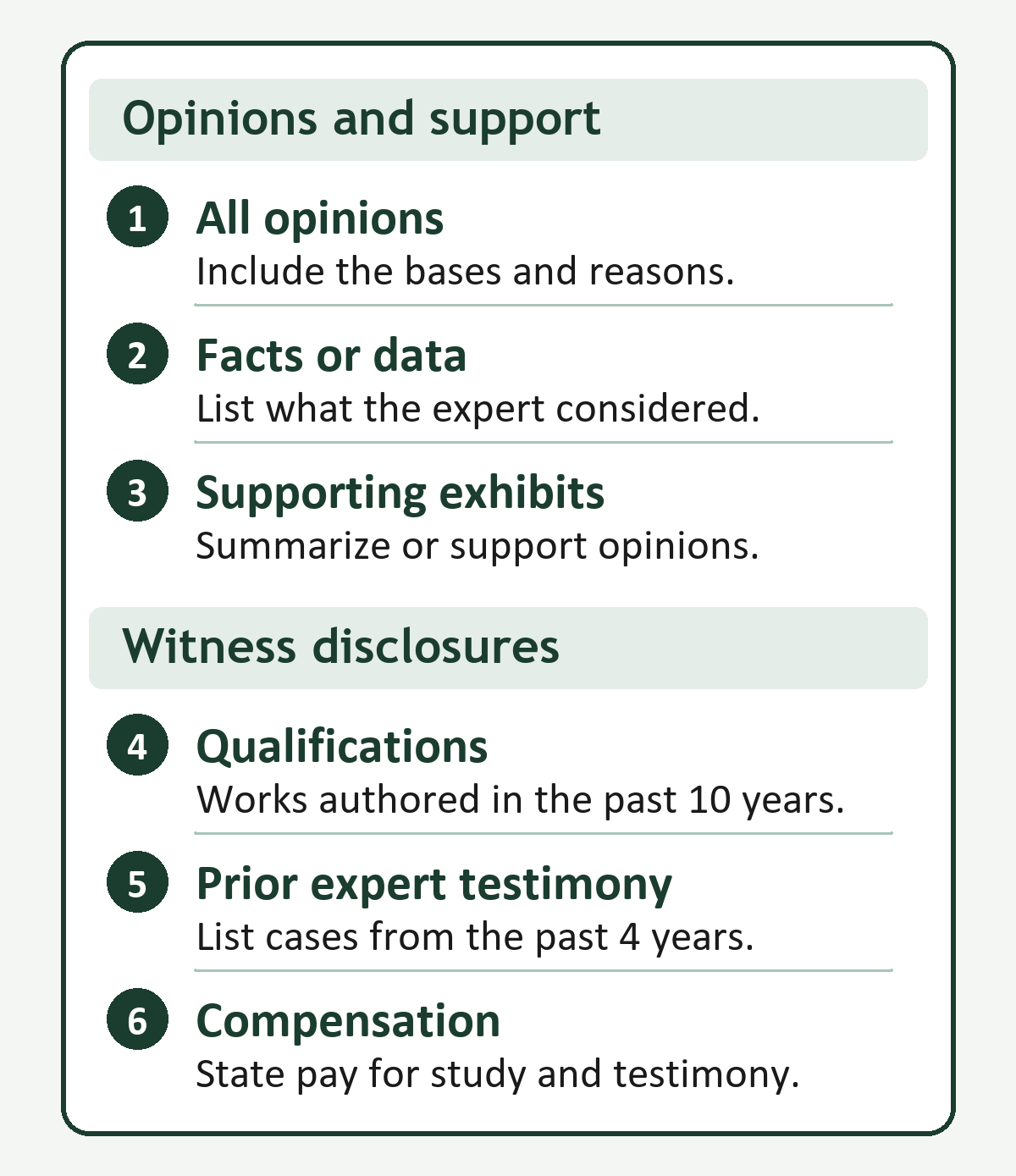
Figure 13.1. The six contents of a federal civil expert report under Rule 26(a)(2)(B).
Federal criminal cases follow a different procedural track (Fed. R. Crim. P. 16), and state courts vary, but the trend across jurisdictions is toward more, not less, written-report requirement for experts. Examiners who expect to testify should plan to prepare written reports.
Analyst Perspective
In a county prosecutor's office, a forensic examiner may produce a written report in 2026 that supports a motion in 2027, gets referenced at trial in 2028, and resurfaces in a 2031 post-conviction appeal. The examiner who wrote it may have moved jobs twice by then. The report is the only thing that still speaks for the examination.
Attorneys also maintain deposition banks: internal or commercial databases of expert witnesses' prior testimony, reports, and deposition transcripts. Anything an examiner writes is potentially discoverable and searchable for the rest of that examiner's professional life. That fact alone justifies the careful-writing discipline taught in the rest of this chapter.
Reference Table: Legal Drivers for Written Forensic Reports
| Legal Context | Requirement | Examiner Implication |
|---|---|---|
| FRCP Rule 26(a)(2)(B) | Expert retained for federal civil trial must provide written report with opinions, basis, qualifications, prior testimony, compensation | Plan to produce a full Rule 26 report for every federal civil engagement where testimony is anticipated |
| Fed. R. Crim. P. 16 | Expert disclosure requirements in federal criminal matters; written summary of opinions, bases, qualifications | Requirements narrower than Rule 26 but still written |
| State expert-disclosure rules | Vary by jurisdiction; several states model their rules on Rule 26 | Verify state requirements at case intake; do not assume parity with federal |
| Internal corporate policy | Many corporate investigations require a written report per engagement regardless of litigation posture | Treat every internal investigation as if the report will eventually be produced in discovery |
13.2 Audience, Purpose, and Scope
Every report starts with a mission. Before drafting a single sentence, the examiner must know three things: who is reading, why they are reading, and what question the report was commissioned to answer. These decisions drive every downstream choice about structure, length, and tone.
Three audience archetypes recur across public and private sector work:
- Technical peer reader, usually another forensic examiner performing quality assurance or a defense expert performing rebuttal analysis. Demands methodological precision, exact artifact paths, hash values, tool versions, and reproducibility. Will challenge unstated assumptions.
- Legal professional reader, including the retaining attorney, opposing counsel, and the trial judge. Needs factual findings tied to specific evidence, written in plain language, without interpretation that crosses into legal conclusion. Cares about what is defensible under cross-examination.
- Executive or non-technical stakeholder, such as a Chief Information Security Officer (CISO), an HR director, or corporate counsel. Wants the bottom line up front, supporting detail available on request, and a clear answer to the engagement question.
A single report has to serve all three. The solution, developed across sections 13.4 and 13.5, is a structural one: an executive summary that stands alone for non-technical readers, a findings section that sits at the technical-legal intersection, and a methodology appendix that only the peer reviewer will read in full.
Figure 13.2 shows where three readers can start in the same report.
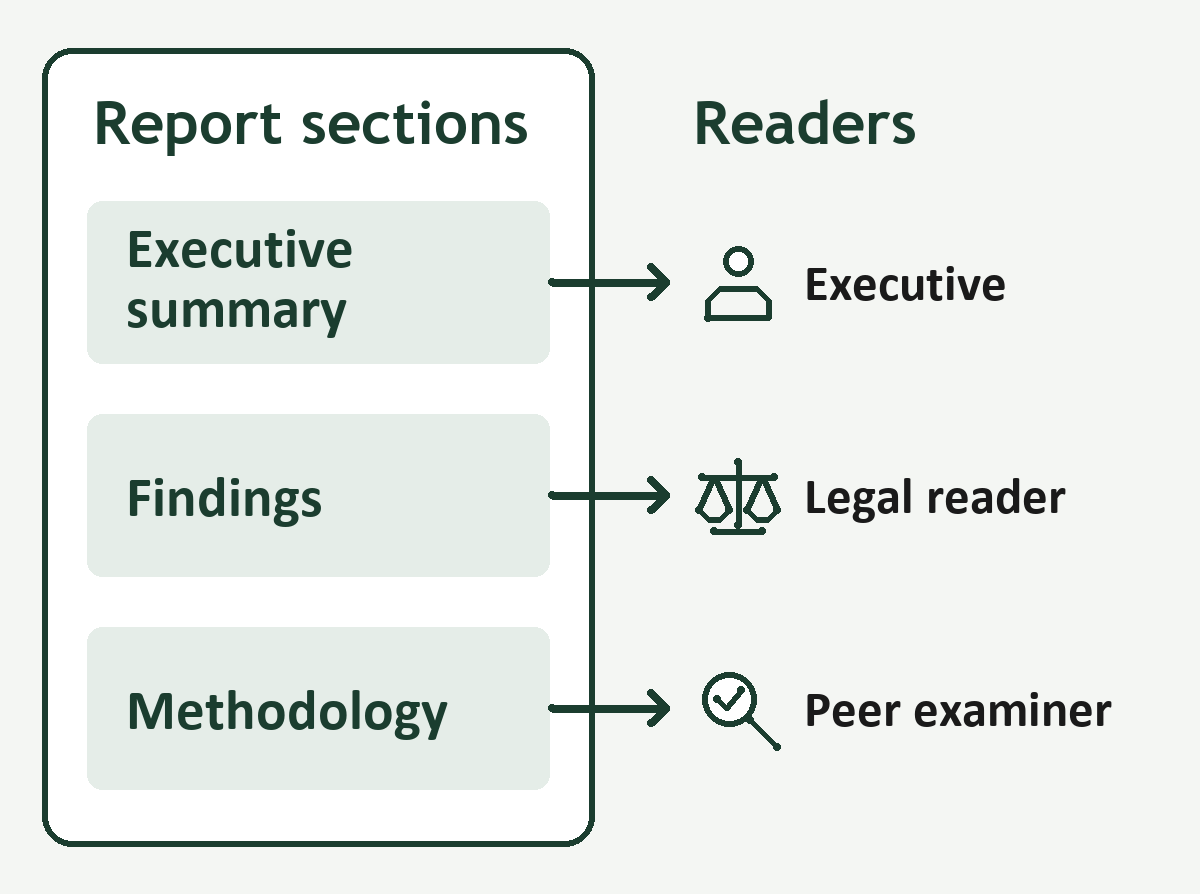
Figure 13.2. The same report gives readers different entry points depending on their questions.
Scope discipline is equally important. A common failure mode is the examiner who writes everything found during examination, rather than answering the specific question that was asked. Findings outside scope belong in an appendix or in a separate communication, not woven into the narrative of a scoped engagement. A report that drifts out of scope invites opposing counsel to argue that the examiner exceeded authority or cherry-picked conclusions.
One distinction matters enough to flag before any drafting starts. Findings are observable facts about artifacts. Conclusions are reasoned opinions about what those findings mean. Recommendations are suggested next steps. Conflating these is among the most common and most damaging report errors. A finding states that the user account jsmith executed robocopy.exe at 02:14:33 UTC on March 15, 2026. A conclusion reasons that this execution is consistent with bulk file transfer to an external drive. A recommendation suggests preserving the external drive identified in the USB device history for further examination. All three belong in the report. Each has a different place.
Figure 13.3 traces the example from the observation to the examiner’s interpretation and proposed action. Robocopy is a Windows file-copy utility. The example timestamp uses Coordinated Universal Time (UTC).
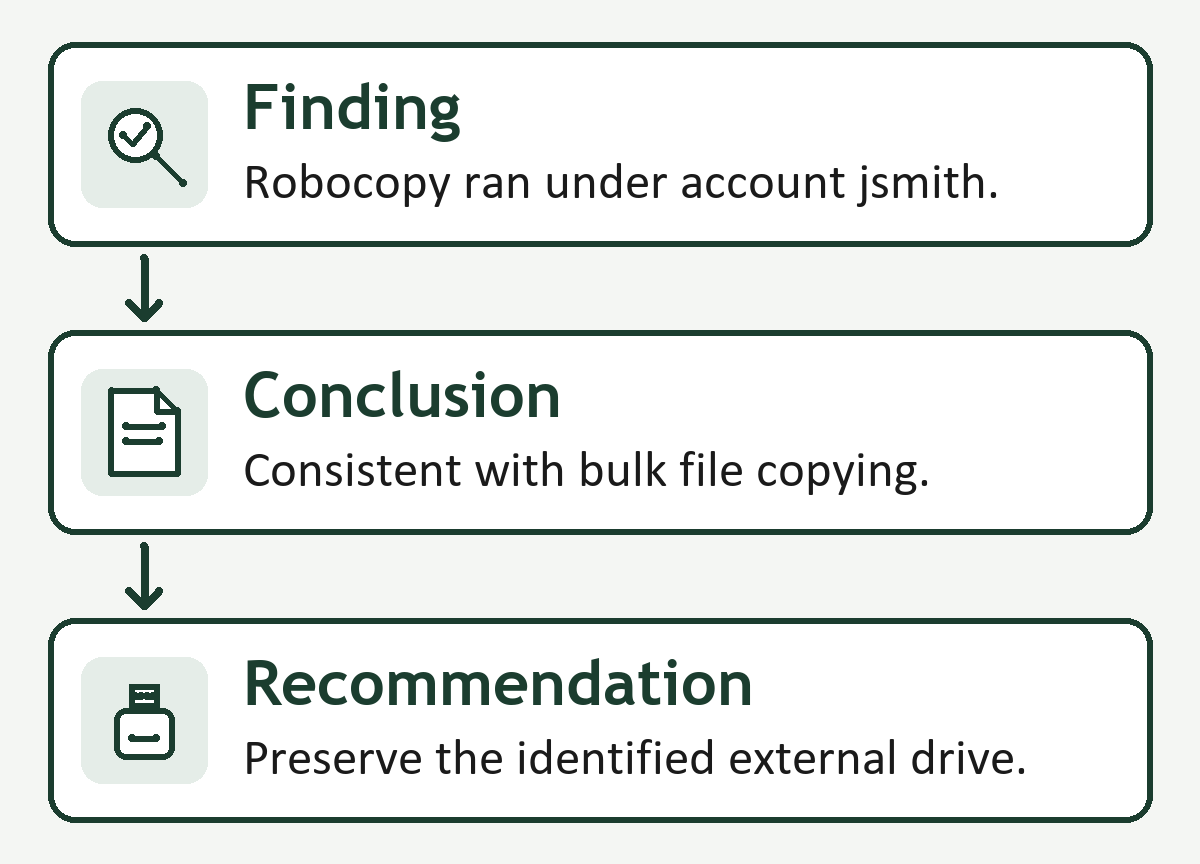
Figure 13.3. The examiner separates the recorded event, its interpretation, and the proposed next step.
13.3 Types of Forensic Reports
Digital forensic examiners are not asked to produce one kind of document. Over the course of a single engagement, the same case may generate an examination plan, multiple verbal briefings, a preliminary written report, a final written report, and one or more affidavits. Each report type carries different discovery exposure and serves a different purpose.
- Examination plan: an internal document, usually requested by the retaining attorney, outlining what the examiner intends to do, what questions to anticipate during testimony, and how to respond to likely cross-examination. Treated as attorney work product when prepared at the attorney's direction.
- Verbal report: the examiner briefs the attorney or client by phone, video, or in person. No written artifact. Common during active investigations when findings are preliminary and written documentation would prematurely lock in conclusions.
- Preliminary written report: an interim written update delivered to the client. High risk. Anything written becomes subject to discovery if the examiner is later disclosed as a testifying expert. A preliminary report that guesses wrong can be used at trial to impeach the examiner.
- Final written report: the primary deliverable. Structured, complete, intended to stand on its own, and the focus of most of this chapter.
- Affidavit or declaration: a sworn written statement, usually shorter and narrower than a full examination report, attesting to specific factual findings. Used to support search warrants, motions, and civil filings. Subject to perjury standards.
Figure 13.4 pairs each report type with its purpose during an engagement.
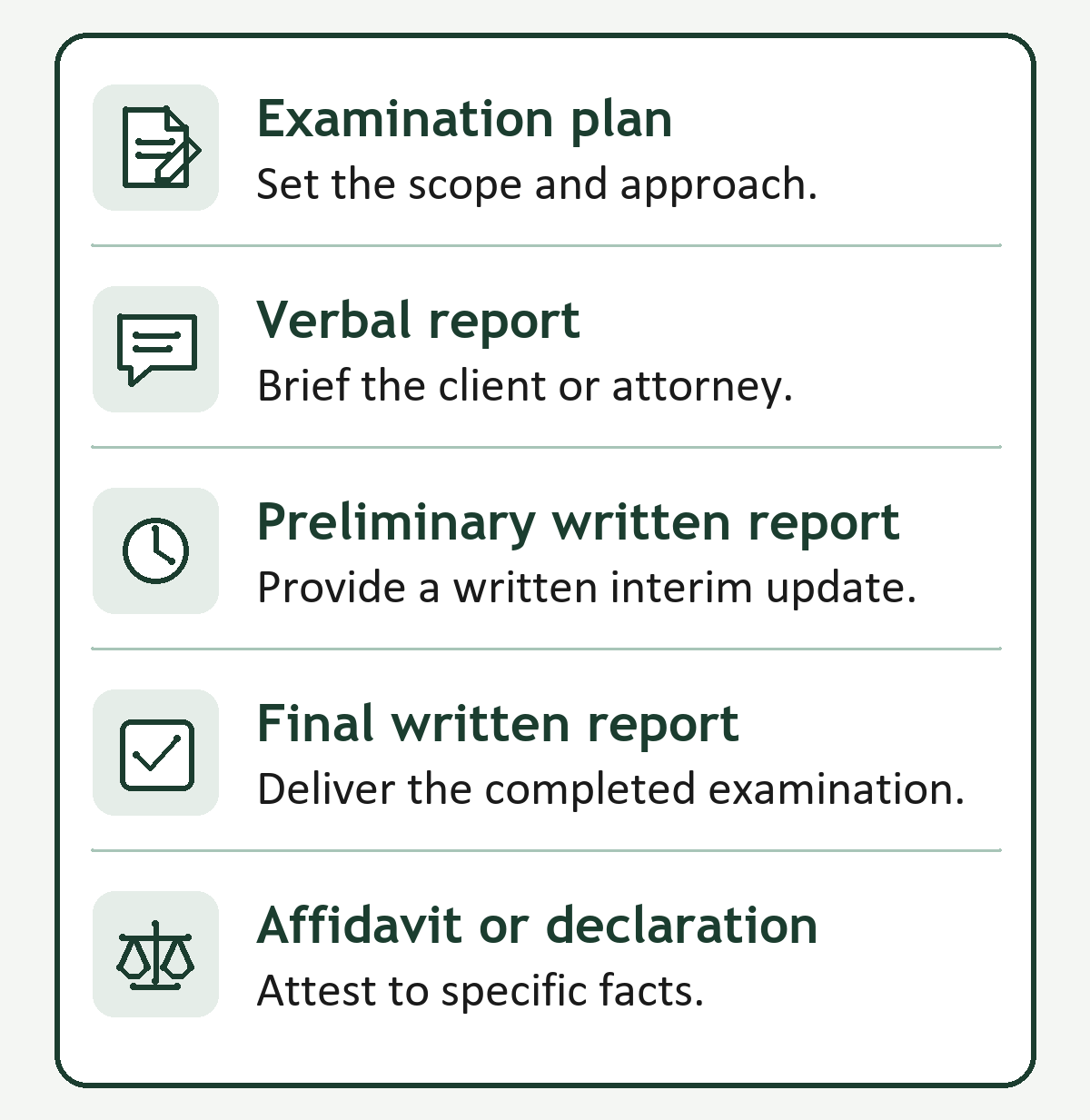
Figure 13.4. An engagement can use several report types as the audience and purpose change.
Warning
A preliminary report is a finished interim document delivered to a client. A rough draft is internal working material. Both are potentially discoverable if disclosed, but the preliminary report is almost always discoverable once the examiner is named as a testifying expert.
Destroying a report, including a preliminary draft, to avoid discovery can itself constitute spoliation: the intentional destruction, mutilation, alteration, or concealment of evidence. Spoliation can draw sanctions, adverse inference instructions at trial, and professional discipline. The defense against the discovery problem is to write carefully from the first draft, not to write carelessly and then try to discard the evidence.
Expert opinion testimony is governed by a four-part standard that shapes the written report that supports it. An examiner offering opinion testimony must demonstrate that the opinion rests on special knowledge, training, or experience; that the examiner qualifies as an expert in the relevant field; that the opinion is stated to a reasonable degree of professional certainty; and that the opinion is grounded in known facts from the case or in a properly constructed hypothetical. The written report is the place where each of these four elements is established.
13.4 Report Structure and Anatomy
A well-constructed forensic report follows a predictable section hierarchy. Predictability matters here for the same reason that predictability matters in any piece of technical writing: readers who know where to find the answer to a question can find it faster. An attorney scanning the report the night before a hearing should not have to hunt for the conclusion.
The standard section order looks like this:
- Title page and case identifiers: case number, examiner name and credentials, date, revision number, classification level if applicable, and distribution list.
- Abstract or executive summary: condenses the entire examination to a single page. Answers four questions in order: What was asked? What was examined? What was found? What does it mean? Non-technical readers often stop at this section.
- Table of contents: required for any report over approximately fifteen pages. Useful in shorter reports as a navigation aid during cross-examination.
- Background and scope: retention details, engagement question, items received, examination boundaries, time frame of the examination.
- Methodology: how the examination was conducted. Tools and tool versions. Validation steps. Hashing practices. Use of working copies. Detailed enough that a peer examiner with the same materials could reproduce the examination.
- Findings: the observable facts. Organized by artifact category, timeline, or custodian, depending on case type. Each finding cites a specific exhibit or appendix reference.
- Analysis: interpretation of findings. Connects individual findings into a coherent picture that answers the engagement question.
- Conclusions: the direct answer to the engagement question. Bounded, supported, and traceable back to specific findings and analysis.
- References: cited tools, standards (NIST SP 800-86, NIST SP 800-101, SWGDE best practices, RFC 3227 for evidence collection), legal authorities, and prior literature.
- Glossary: defines every technical term the report uses. Non-technical readers depend on the glossary; technical readers use it to confirm shared vocabulary.
- Appendixes: raw tool outputs, hash manifests, chain-of-custody documents, full timeline exports, complete file listings, screenshots, hex excerpts.
Figure 13.5 groups the sections into front matter, the report body, and back matter. Front matter identifies the case and helps readers navigate. The body presents the examination, and back matter holds reference and supporting material.
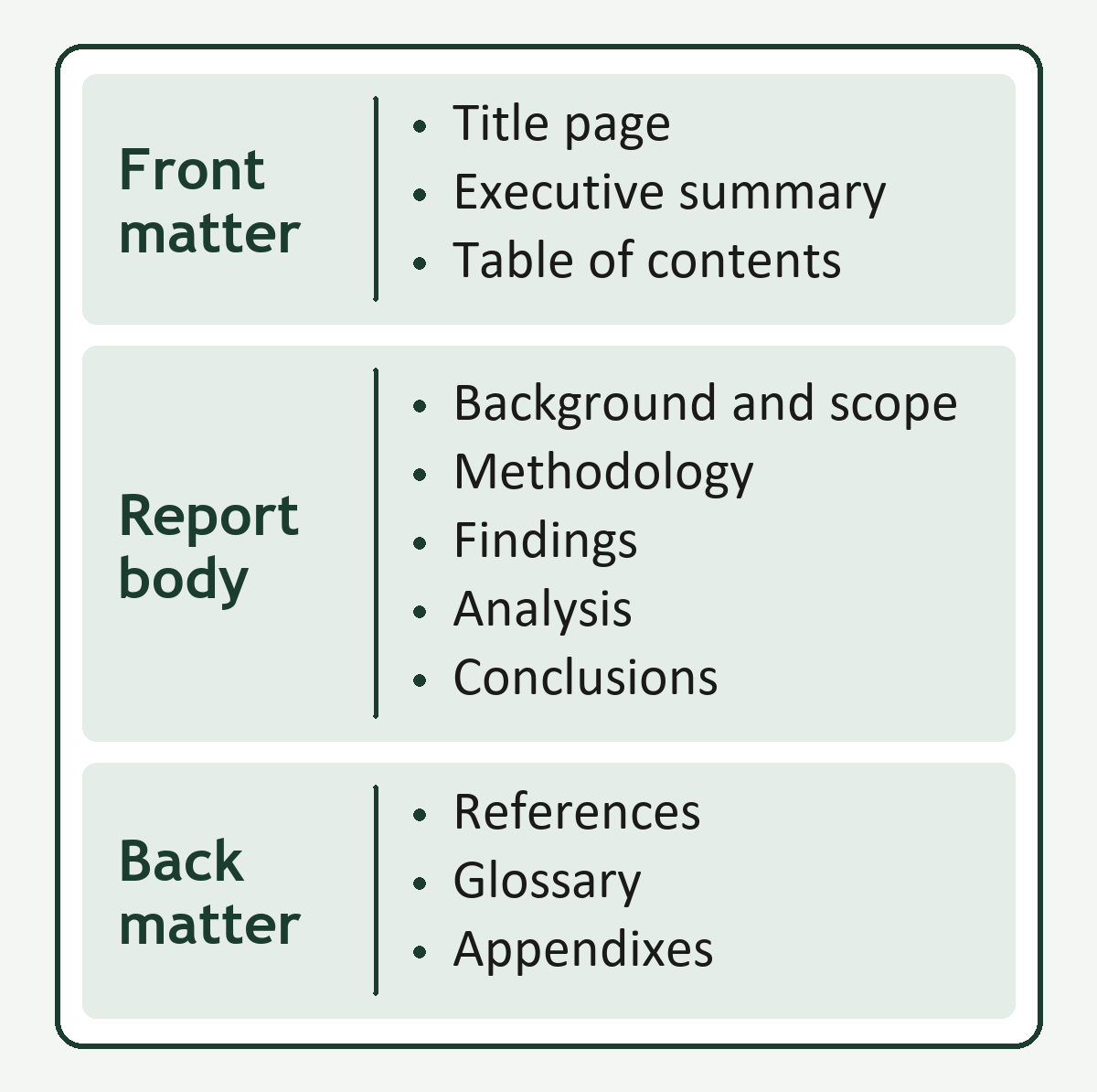
Figure 13.5. The section order gives readers a predictable path from the case overview to the supporting material.
Reference Table: Report Section Anatomy
| Section | Purpose and Content |
|---|---|
| Title page | Case identifiers, examiner credentials, revision number, classification |
| Executive summary | Single-page answer: what was asked, examined, found, means |
| Table of contents | Navigation aid; mandatory in longer reports |
| Background and scope | Retention, engagement question, items received, boundaries |
| Methodology | Tools, versions, validation, hashing, reproducibility notes |
| Findings | Observable facts tied to specific exhibits |
| Analysis | Interpretation connecting findings into a coherent picture |
| Conclusions | Direct answer to the engagement question, bounded and supported |
| References | Tools, standards, legal authorities, prior literature |
| Glossary | Every technical term used in the report, defined |
| Appendixes | Raw outputs, hash manifests, chain-of-custody, full exports |
The executive summary deserves one more note. Write it so that it can be extracted and read independently of the rest of the report. A stakeholder who receives only the summary (through forwarded email, a hearing packet, or a case briefing) should still understand the scope, the findings, and the bottom line. This is not redundancy. It is deliberate design for a document that will be excerpted in ways the author cannot predict.
The rule of thumb for deciding what belongs in the body of the report versus an appendix is simple. If a reader needs the material to follow the argument, it is in the body. If a reader needs the material to verify the argument, it is in an appendix.
13.5 Writing Clearly and Objectively
Reports succeed or fail on four writing axes: ideas, organization, grammar and vocabulary, and mechanics. Weakness in any one of these undercuts the others. A report with strong findings and sloppy mechanics reads as unreliable. A report with perfect mechanics and disorganized findings reads as incoherent.
Active voice is the default. The examiner ran the hash, not "the hash was run." Active voice identifies the actor, which matters when opposing counsel is searching for ambiguity. Passive voice is acceptable only when the actor is unknown or truly irrelevant to the sentence, which in forensic reports is rare.
Objectivity and tone govern how findings are presented. Findings are observations. The report should read as calm, detached, and neutral. Emotional language, advocacy framing, and conclusions that overreach the evidence are all grounds for challenge at deposition or trial.
Precision without jargon is the balance every examiner must strike. Define every technical term on first use. "MFT" becomes "Master File Table (MFT), the NTFS data structure that catalogs every file on a volume." Once defined, the acronym carries the rest of the document. Readers who already know the term are not insulted; readers who do not know the term are not lost.
Signposts are deliberate wayfinding sentences that tell the reader where they are in the argument. Phrases like "this section addresses," "the following three findings all relate to," and "having established the user's account activity, the next question is" help both technical and non-technical readers navigate long reports under time pressure.
A short antipattern list is worth naming explicitly. Avoid in every draft:
- Hedging that reads as uncertainty rather than precision ("it seems possible that...")
- Legal-adjacent phrasing that crosses into legal conclusion ("the defendant committed" rather than "the artifacts show the user account ran")
- Marketing language ("cutting-edge tool," "powerful analysis")
- Unsupported superlatives ("clearly," "obviously," "without doubt")
- Negative framing where positive framing is possible ("no evidence of X was found" versus "the examination did not recover artifacts consistent with X")
Figure 13.6 revises a fictional draft finding to tie each claim to a recorded event.
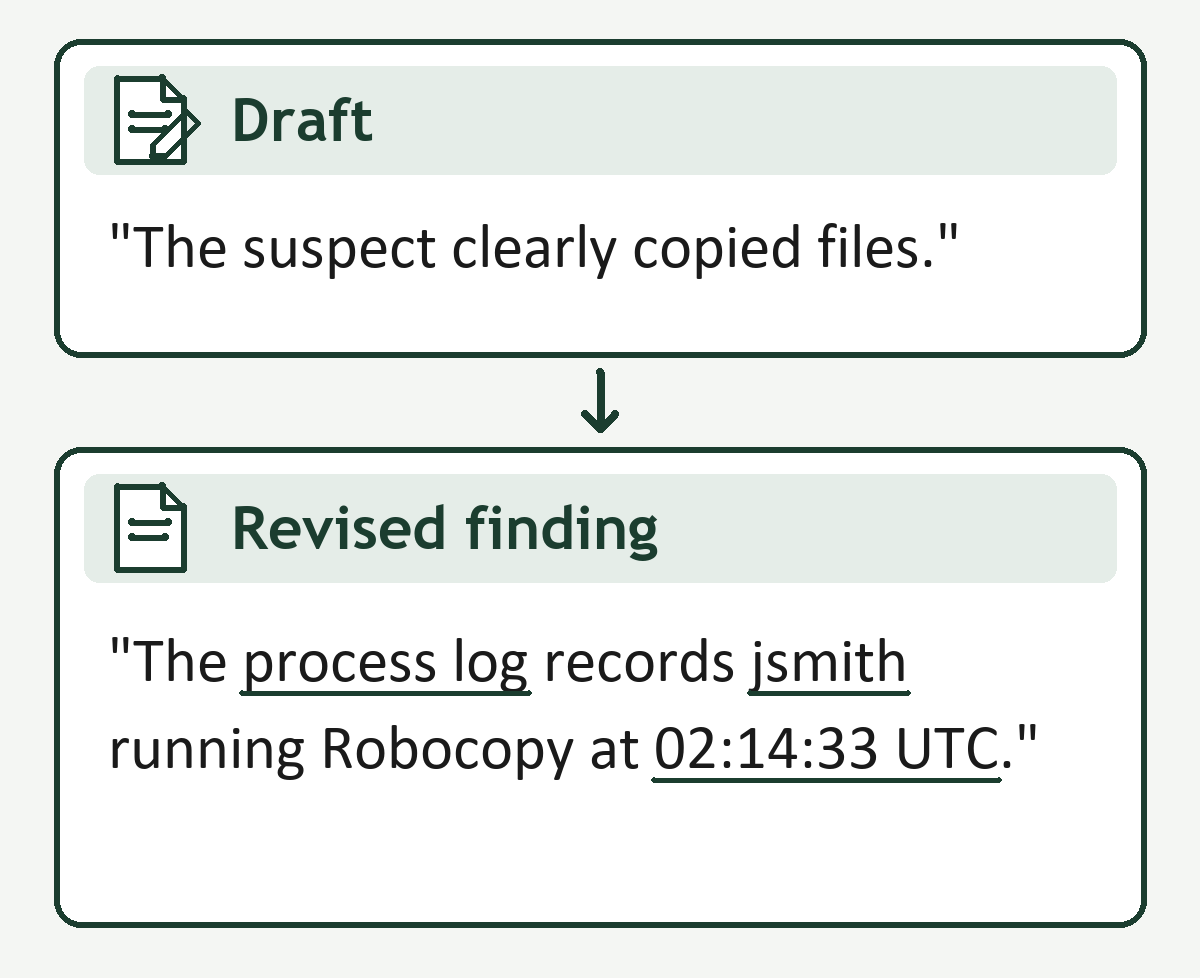
Figure 13.6. The revision identifies what the examiner observed and attributes the observation to a specific record.
Draft “The suspect clearly copied files.” Revised finding “The process log records jsmith running Robocopy at 02:14:33 UTC.” The revision identifies the source record, user account, and exact time including the time zone.
Analyst Perspective
When an examiner testifies, opposing counsel will often read specific sentences from the report out loud, then ask the examiner to explain them. Sentences that were easy to write casually can become difficult to defend under that kind of attention. The discipline is to write every sentence as if it will be read aloud in court, because eventually some of them will be.
The first-draft discipline that follows from this is simple. Write the first draft as if it will be read by opposing counsel, because in most cases it eventually will. Editing up to that standard from a casual draft takes more work than writing to it from the start.
13.6 Layout, Formatting, and Visual Evidence
Two numbering systems are in common use across forensic and legal writing.
- Decimal numbering (1.0, 1.1, 1.1.1) is scannable, easy to cross-reference, and standard in technical documents. Recommended default for forensic reports.
- Legal-sequential numbering (I, A, 1, a) is used in pleadings and some affidavit formats. Recognizing this numbering scheme helps when cross-referencing those documents.
The specific formatting choice matters less than the consistency of its application. Once heading sizes, fonts, table formats, and code blocks are chosen, they should be applied identically throughout the report. Inconsistency signals carelessness, and carelessness on the surface of the document erodes the credibility of the content underneath.
Every figure in the report has a caption and a number. Every figure is referenced by number in the text before it appears. Figures that are not referenced are cut during the editing pass. The report is not a gallery.
Hash tables appear in most forensic reports. When reporting a hash value, always include the algorithm name (SHA-256, not simply "hash"), the exact hash string, and the artifact the hash represents. Use a monospace font for hash strings so that visually similar characters (0 and O, 1 and l, 8 and B) remain distinguishable.
Timeline exhibits are among the most powerful visual tools in forensic reports. Each timeline entry needs a timestamp with its time zone, a source artifact, and a concise event description. Large timelines belong in appendixes; a representative excerpt covering the relevant event window goes in the body.
Figure 13.7 uses three fictional records to show what a timeline excerpt contains. USB stands for Universal Serial Bus, the interface used here to connect the external drive.
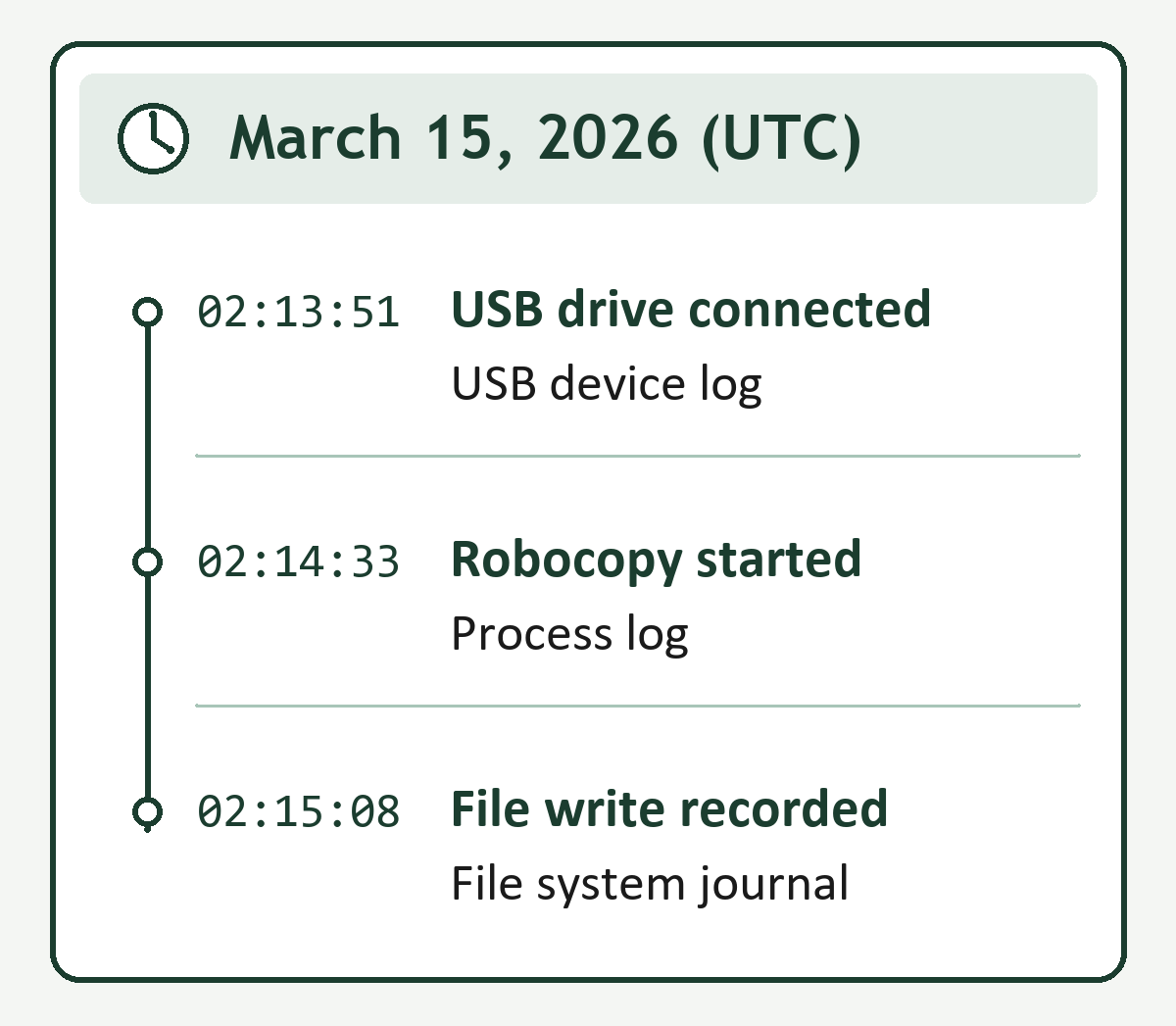
Figure 13.7. The excerpt keeps enough source information for a reader to locate the records behind the displayed events.
All three entries are from March 15, 2026, in UTC. The USB device log records a drive connection at 02:13:51. The process log records Robocopy starting at 02:14:33. The file system journal records a file write at 02:15:08.
Error and uncertainty analysis documents limitations that affect the findings. Where a finding depends on an interpretation that could plausibly go another way, the report says so. Stating uncertainty strengthens credibility. Concealing uncertainty creates grounds for impeachment. A sentence like "the timestamp on this artifact reflects the last file-system modification, which in this NTFS configuration may or may not reflect user interaction with the file" is stronger than a flat assertion that glosses the ambiguity.
13.7 Generating Reports with Forensic Tools
Forensic tools produce reports. Autopsy, OSForensics, and Plaso all generate structured outputs that capture findings in a tool-native format. The examiner writes the main report to interpret the tool output and explain its relevance to the audience. The tool output goes in the appendix as an exhibit.
Autopsy 4.x
Autopsy is the free and open-source analysis platform that CFS258 uses as its primary toolchain. Autopsy report generation is accessed from the case view through the "Generate Report" action.
- Output formats: HTML (the default and most broadly useful), Excel (XLSX), KML (for geolocation-rich cases), and STIX (for threat-intelligence pivots).
- Report module selection: examiners select which modules contribute to the report. Commonly included modules include Case Report, Tagged Files, Keyword Hits, Hash Set Hits, and EXIF Metadata. Verify current module names against the Autopsy documentation for the specific version in use.
- Filtering: Autopsy reports can be scoped to tagged items only. This lets the tool-generated output match the specific findings discussed in the report body rather than dumping every item the tool processed.
- Appendix integration: the Autopsy HTML export directory, compressed into a single archive and hashed (SHA-256), is delivered as an appendix. The analyst report references it by appendix letter and by archive hash.
OSForensics
OSForensics is a commercial analysis suite used in private-sector investigations. CFS258 uses it alongside Autopsy.
- Case report generation: OSForensics produces a single PDF case report with embedded findings, chain-of-custody log, and hash verification. The report is generated from the case manager interface using a configurable template.
- Template customization: the report template allows the examiner to add agency and examiner identification, producing consistent professional output across engagements.
- Parallel validation: processing the same case image through both Autopsy and OSForensics yields complementary report artifacts. Using two independent tools strengthens the defensibility of findings that appear in both.
Plaso and log2timeline
Plaso is the forensic supertimeline framework that processes a case image or mounted evidence and extracts events from dozens of artifact types: Windows event logs, browser history, file system metadata, registry keys, prefetch files, LNK files, and more.
- Output formats: Plaso writes a native
.plasostorage file, which is then processed throughpsortto produce human-readable output (L2T CSV is the most common format for report integration). - Report role: a full supertimeline of a typical laptop can contain hundreds of thousands of events. The examiner bounds the timeline to the window relevant to the engagement question, exports that subset, and includes it as a figure or appendix.
- Reproducibility: always record the Plaso version and the exact
psortfilter used. Timeline exhibits must be reproducible by a peer examiner working from the same source image.
Reference Table: Tool-Generated Report Outputs
| Tool | Output Formats | Report Role | Integration into Final Report |
|---|---|---|---|
| Autopsy 4.x | HTML, XLSX, KML, STIX | Tagged findings, keyword hits, hash matches, EXIF | Compressed archive as appendix; analyst report cites by appendix letter |
| OSForensics | PDF case report | Findings summary, chain-of-custody, hash verification | PDF as appendix; parallel validation to Autopsy findings |
| Plaso (log2timeline) | .plaso, L2T CSV (via psort) | Unified supertimeline across artifact types | Bounded timeline excerpt in body; full export in appendix |
13.8 Report Integrity and Peer Review
A report that leaves the lab without integrity controls creates defensibility problems that only surface later, when opposing counsel produces a "different copy" and asks which version is authoritative. Four practices close that loophole.
Final-report hashing: the final PDF or DOCX deliverable receives a cryptographic hash (SHA-256 at minimum). The hash is recorded in the chain-of-custody documentation and, for high-stakes cases, logged in a case management system or notarized. Any later dispute about which version is authentic resolves by hash comparison.
Version control: the report carries a visible revision history. A typical progression runs Revision 1.0 (internal draft), 1.1 (internal QA), 1.2 (peer review revisions), 2.0 (final release). No report leaves the lab without a revision number on the title page.
PDF/A archival format: the final report is delivered as PDF/A (ISO 19005), a long-term archival variant of the PDF specification that prohibits features (external fonts, embedded JavaScript, external media) that could break readability years after delivery. Case lifecycles in criminal matters routinely exceed a decade.
Peer and technical review: no report leaves the lab before a second examiner reads it. The reviewer checks technical accuracy by reproducing a sample of findings, verifies hash values, confirms tool versions, and reads the prose for clarity and defensibility. Lab policies should mandate peer review for any report disclosed externally, and the reviewer's initials should appear on the report title page or in a documented QA log.
Figure 13.8 orders the checks for an example report released in PDF/A, the archival form of Portable Document Format (PDF).
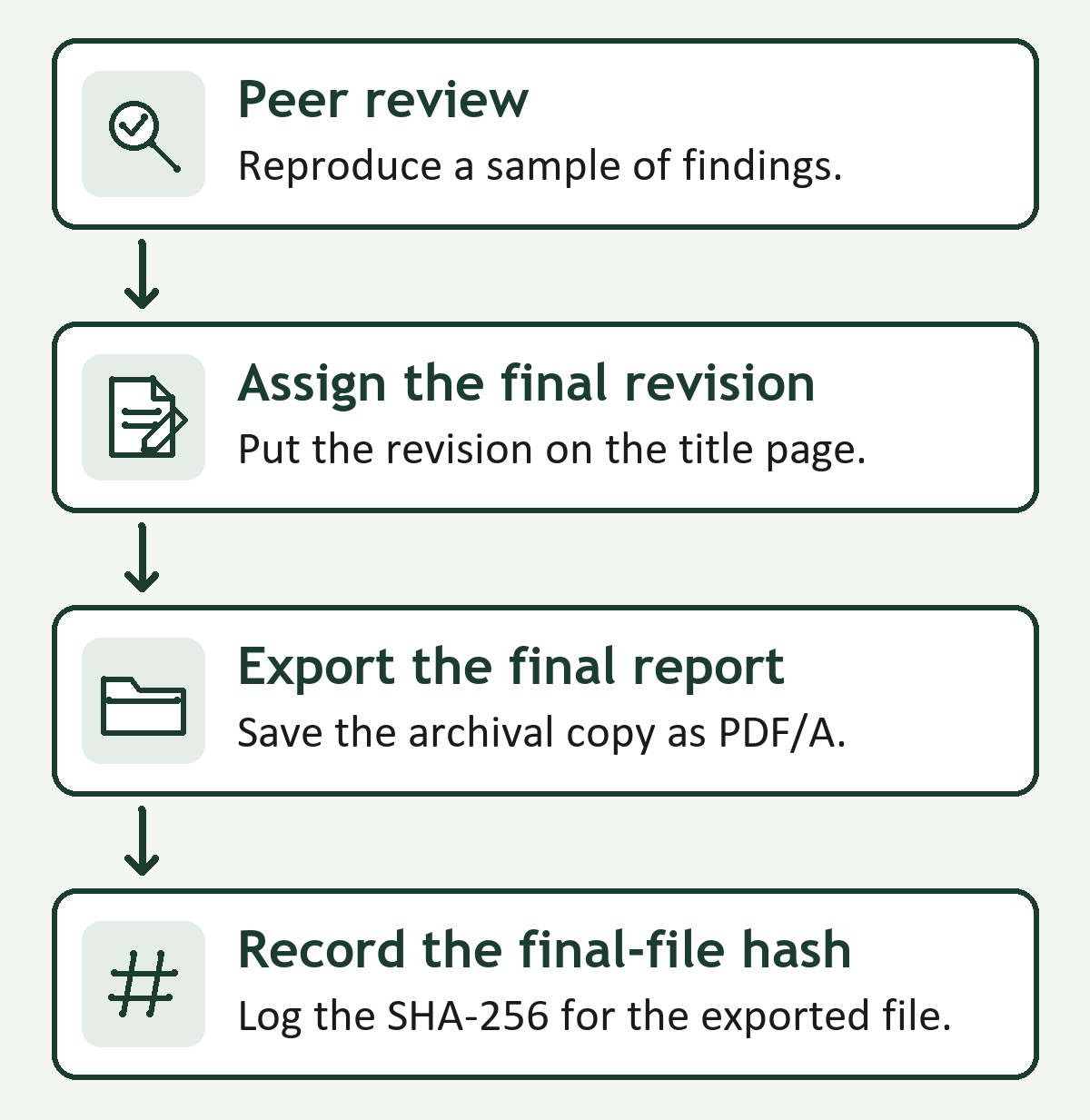
Figure 13.8. The hash, a digital fingerprint of the file, corresponds to the exact bytes of the final export.
A second examiner reproduces a sample of findings during peer review. After review, the author places the release revision on the title page and exports the final PDF/A. The examiner calculates the Secure Hash Algorithm 256-bit (SHA-256) value of the exported file and records it in the chain-of-custody log.
Warning
A report without a revision number and a hash cannot be authoritatively compared to any other copy in circulation. Skipping these controls creates defensibility problems that surface months later, when opposing counsel produces what they claim is a different version of the same report and challenges which one is authentic.
Chain-of-custody documentation is part of the final deliverable, not a separate artifact. The methodology section of the report references the chain-of-custody log by appendix number, and the complete log lives in an appendix. For an examiner working in a shared-evidence environment, the chain-of-custody log is often the first thing opposing counsel examines.
Use these questions to guide peer review before releasing a report.
- Have all hash values in the report been recomputed and verified?
- Does every finding cite a specific exhibit or appendix reference?
- Are all tools named with their exact version numbers?
- Does the conclusion section answer the engagement question directly and only?
- Does every technical term appear in the glossary?
- Does the report carry a revision number and a final hash?
Chapter Summary
- Forensic reports are the primary deliverable through which every other forensic skill is judged. Rule 26 of the Federal Rules of Civil Procedure, along with parallel state and criminal procedural rules, imposes written-report requirements on testifying experts.
- Report design begins with audience, purpose, and scope. Technical peers, legal professionals, and executives read the same document for different reasons, and the structure must serve all three.
- Five types of reports recur in practice: examination plans, verbal reports, preliminary written reports, final written reports, and affidavits or declarations. Each carries different discovery exposure and serves a different phase of an investigation.
- A well-structured report follows a predictable anatomy: title page, executive summary, table of contents, background and scope, methodology, findings, analysis, conclusions, references, glossary, and appendixes.
- Clear writing balances precision with accessibility. Active voice, defined terms, objective tone, deliberate signposts, and disciplined avoidance of marketing language, hedging, and legal-adjacent overreach all improve both technical and non-technical readability.
- Layout and formatting choices (numbering systems, figure placement, hash tables, timeline excerpts) reinforce the credibility of the content and must be applied consistently.
- Tool-generated outputs from Autopsy, OSForensics, and Plaso are exhibits, not reports. The analyst-authored narrative remains the primary deliverable; tool outputs support and validate it from the appendix.
- Report integrity controls (final-report hashing, revision numbering, PDF/A archival, peer review) protect the report from later challenge and preserve its authority across the lifespan of a case.